
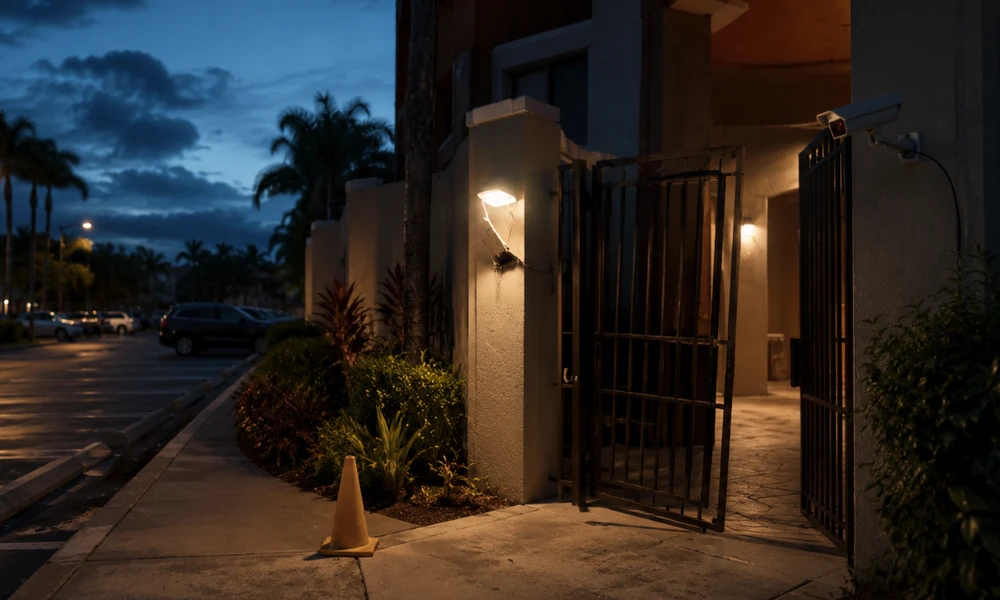
People who enter an apartment complex, hotel, shopping center, parking garage, restaurant, or similar property generally expect reasonable safety measures. Unfortunately, inadequate lighting, broken locks, unsecured entrances, or ignored reports of criminal activity can create opportunities for preventable harm. When someone is injured during a foreseeable criminal act, Florida law may permit a negligent security claim against the party responsible for the property.
What Is Negligent Security?
Negligent security is a type of premises liability claim. It may arise when a property owner, operator, lessor, or manager fails to take reasonable precautions against foreseeable criminal conduct. These cases often involve assaults, robberies, shootings, sexual attacks, or other crimes committed by a third party.
The fact that a crime occurred does not automatically make the property owner responsible. Property owners are not insurers of every visitor’s safety. A claimant generally must show that the responsible party owed a duty of care, failed to meet that duty, and contributed to the resulting injury.
When Is Criminal Conduct Foreseeable?
Foreseeability is frequently one of the most disputed issues in a negligent security case. Evidence of earlier crimes or similar incidents at or near the property may indicate that management knew-or reasonably should have known-about a dangerous condition.
Other warning signs may include repeated complaints from tenants or customers, threats involving a particular individual, police calls, prior security reports, or a pattern of trespassing. The nature, location, timing, and similarity of past incidents can all affect whether the later crime was reasonably predictable.
A sudden, isolated attack may not create liability when the property owner had no reason to anticipate it. Every claim therefore depends heavily on its particular facts.
Examples of Inadequate Security
Poor security can take many forms. Common allegations include:
- Burned-out or insufficient lighting in parking areas and walkways
- Broken gates, doors, fences, windows, or access-control systems
- Security cameras that do not work or fail to cover important areas
- Failure to respond to reports of suspicious activity
- Inadequate staffing or poorly trained security personnel
- Failure to repair locks or restrict access after earlier incidents
- Landscaping or structural features that create concealed areas
A claimant must usually connect the alleged security failure to the incident. For example, evidence that an attacker entered through a gate left unrepaired despite repeated complaints may be more significant than an unrelated defect elsewhere on the property.
Special Considerations for Florida Properties
Florida law requires the factfinder in certain premises-liability cases involving third-party crimes to consider the fault of everyone who contributed to the injury. That may include the criminal offender as well as other responsible parties.
Florida also provides a presumption against liability for qualifying multifamily residential properties that substantially implement specified measures. These measures include entry and exit cameras, parking and common-area lighting, certain locks, employee safety training, and periodic crime-prevention assessments. The property owner or principal operator bears the burden of establishing compliance with those requirements.
Evidence That May Support a Claim
Important evidence can disappear quickly after an incident. Useful materials may include surveillance recordings, photographs, maintenance records, access logs, incident reports, police records, witness information, tenant complaints, and communications with management. Medical records and documentation of lost earnings may help establish the extent of the resulting damages.
An injured person should prioritize medical care, report the incident, photograph relevant conditions when it is safe to do so, and preserve available records. Because filing deadlines and legal requirements vary, obtaining individualized advice promptly may help protect important rights.
Negligent security cases balance two principles: property owners cannot prevent every crime, but they should not ignore reasonably foreseeable dangers. When inadequate precautions contribute to an injury, the circumstances deserve careful investigation.
This article provides general information and is not legal advice.
This post was written by a professional at Bonardi & Uzdavinis, LLP. Bonardi & Uzdavinis, LLP is a boutique, full service law firm providing its clients with a wide range of representation. Our primary areas of practice include real estate, probate, personal injury, construction, and commercial litigation. If you are looking for a real estate attorney or personal injury lawyer sarasota contact us today for a case evaluation today!